I remember the moment clearly—my brand-new Dolby Atmos soundbar was sitting proudly in my living room, eager to transform movie nights. Yet, instead of immersive sound, I was greeted with hollow echoes and missing bass that just didn’t do justice to my favorite films. Frustration crept in as I realized that despite spending a pretty penny on top-tier tech, my open-concept space was sabotaging my audio experience. It hit me then—why are so many Dolby Atmos soundbars failing in these sprawling, modern layouts?
Understanding the Challenge of Open-Concept Spaces
Open-concept rooms, with their high ceilings and wide spaces, pose unique challenges for audio systems. Unlike smaller, enclosed rooms designed for optimal sound, these layouts have echoes, bass loss, and uneven sound distribution. Many people dive into upgrading their soundbars expecting miracles, but without considering room acoustics, they often end up disappointed. This is exactly what happened in my early days—failing to recognize that my room’s design was the silent culprit. If you’re experiencing similar issues, you’re not alone. But here’s the good news: I found solutions that dramatically improved my setup. Curious whether your current system is the issue? Let’s explore how to make your Dolby Atmos soundbar truly shine in your open-plan home.
Position Your Soundbar Strategically
Place your soundbar near the TV, ideally at ear level when seated. Avoid placing it behind furniture or concealed behind objects, as this muffles sound and diminishes Atmos effects. Experiment with mounting it on the wall directly below or above your TV for optimal reflection of height channels. I once mounted mine above the fireplace mantle, which surprisingly improved upward sound reflection, making the Atmos experience more vivid—though I initially struggled with cable management.
Optimize Subwoofer Placement for Deep Bass
Position your wireless subwoofer in a corner or against a wall to boost bass response. Avoid placing it on the floor near a corner if it causes rattling or distortion; try slightly off-center for a balanced sound. Use the room’s natural acoustics—think of your room as a musical instrument that you need to tune. I placed mine in a corner at first, but moved it to consider floor vibrations, resulting in cleaner bass without rattles. For more advanced tips, see wireless subwoofer placement techniques.
Maximize Reflection with Room Treatment
Don’t forget surfaces matter. Use soft materials like rugs and curtains to absorb echoes, but strategically place reflective surfaces—mirrors or smooth walls—to bounce sound toward sitting areas. Think of sound as a laser beam: bouncing it around can enhance coverage and clarity. I added curtains to my windows and placed a bookshelf opposite the soundbar to reflect upward-firing effects, enriching the height channels. Discover how to fix Atmos ceiling reflections at room reflection fixes.
Use Calibration Settings Smartly
Access your TV or sound system’s calibration menu. Adjust the dialog level to prevent tinny sound, bass to avoid muddiness, and surround volume for immersive feel. I recommend performing a test at different volume levels to find the sweet spot. For specific settings for your model, check TV soundbar calibration tips. Proper calibration transforms a generic setup into an immersive theater.
Leverage Wireless Subwoofer Tactics
Position your wireless sub at least 1 meter away from Wi-Fi routers or other wireless devices to prevent interference. Using a dedicated Wi-Fi channel or a wired Ethernet connection can stabilize signal quality. If you notice cutouts or lag, consider addressing wireless sub issues proactively. I used these tactics after noticing lag during movie chase scenes, resulting in seamless bass delivery that complements height channels beautifully.
Adjust Speaker Angles for Better Sound Dispersion
Some soundbars allow tilt or swivel adjustments—angle them slightly upward or downward based on your seating distance. Imagine sound like water; angling speakers directs this flow just right into your listening zone. I experimented with slight tilts, which improved surround effects without overly emphasizing any one channel. For models with upward-firing speakers, ensure unobstructed ceiling clearance for proper Atmos reflection. Learn more about optimizing soundbar angles at height channel optimization.
When it comes to upgrading your home audio, a common misconception is that simply choosing a fancy wireless subwoofer or a high-end Dolby Atmos soundbar guarantees cinematic sound. However, in my experience, many enthusiasts overlook critical subtleties that can make or break the real performance of these systems.
Are All Wireless Subwoofers Truly Interference-Free?
Contrary to popular belief, wireless subwoofers are not immune to interference—especially in homes packed with Wi-Fi networks, smart devices, and multiple electronic gadgets. Many users place their subwoofers in corners or near routers, unaware that this can cause lag, skip, or muffled bass. Advanced experts recommend strategic placement and even using dedicated Wi-Fi channels for optimal results, as highlighted in wireless subwoofer setup tips. Recognizing these nuances can help you avoid the trap of disappointed audio.
Is the Power of Your Soundbar Limited by Room Acoustics?
The notion that a premium soundbar alone will deliver immersive surround sound in any environment is a myth. Room acoustics play a pivotal role, particularly with complex formats like Dolby Atmos. Many users miss out because they don’t calibrate their systems properly or neglect the importance of room reflection and damping. For instance, strategically placing soft materials like curtains and rugs can significantly enhance sound clarity—features often dismissed by beginners. For detailed insights into maximizing your setup, explore surround soundbar tips.
Are Soundbar Deals Always a Great Bargain?
One of the most insidious myths is that big discounts or bundle deals inherently mean saving money. In reality, many deals are inflated or include unnecessary extras. Savvy shoppers dig into specifications, read reviews, and compare features to find authentic value—sometimes buying a slightly older model with better reviews can outperform a new, discounted one. To help navigate this, visit trusted deal sources.
How to Fine-Tune Dolby Atmos for Maximum Effect
Many enthusiasts set up Atmos systems expecting dramatic overhead effects, but subtle misalignments or improper calibration can mute the experience. The truth is, not all Atmos height speakers and upward-firing modules are created equal—some don’t produce a convincing sense of dimension. Precise positioning, angle adjustment, and system calibration are essential. Leveraging expert calibration procedures, as detailed in Dolby Atmos innovations, can turn your setup from ordinary to extraordinary. Let’s face it: understanding these intricate details could be the difference between a good sound system and an immersive listening experience. So, next time you think you’re getting the full potential, remember—many of these are hidden traps that only savvy users spot. Have you ever fallen into this trap? Let me know in the comments.
To ensure your high-end sound system continues to deliver breathtaking audio, proper maintenance and the right tools are essential. Regular calibration, using specialized software like Dirac Live, allows you to optimize sound dispersion and bass response specific to your room acoustics. I personally rely on Dirac Live because it automatically measures your space with a microphone and adjusts your system’s EQ accordingly, saving hours of manual tweaking. For wireless setups, investing in a wireless subwoofer calibration kit helps eliminate lag and synchronization issues, which are common in large or complex rooms. As audio technology advances, automation and precise tuning tools will become even more sophisticated, making maintenance simpler yet more effective.
Keeping your system performing at its best isn’t a one-time effort. Implementing regular checks using a calibrated microphone and software ensures consistent sound quality, especially as ambient room conditions or furniture arrangements change over time. Additionally, firmware updates from your soundbar manufacturer often include performance improvements and new features; setting up automatic update notifications ensures you don’t miss out on these enhancements. Remember, a well-maintained system preserves the immersive experience Dolby Atmos promises, helping you get the most out of your investment.
How do I maintain my surround sound system over time? Apart from firmware updates, periodically re-calibrating your soundbar and subwoofer with tools like Dirac Live or budget-friendly calibration devices helps counteract acoustic drift and room changes. Keep cables tidy and check connections to prevent signal loss, and consider upgrading older components before they degrade. For complex setups, consulting professional installers familiar with Dolby Atmos configurations can be worthwhile; they can fine-tune your system for optimal performance. Looking ahead, as smart home integration expands, expect tools that leverage AI to automatically adjust sound profiles based on room occupancy, mood, or activity—bringing your listening experience to new heights.
Don’t wait for performance dips—try using advanced calibration software today to keep your soundbar performing like new. For trusted components and setup tips, visit our detailed guide on Dolby Atmos innovations and stay ahead in the world of immersive audio.
Lessons Hidden in My Audio Journey
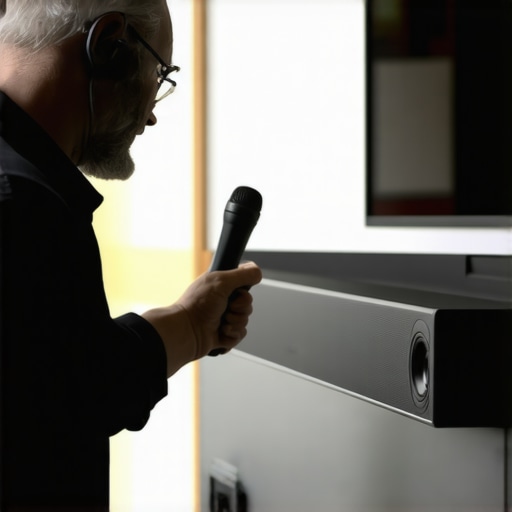
One of the toughest lessons I learned was that even the best Dolby Atmos soundbar can’t overcome poor room acoustics without proper setup. I initially believed that buying premium equipment would solve all sound issues, but I quickly realized that placement and room treatment were just as crucial. Experimenting with angles and reflection surfaces was a game-changer, revealing how much physics influences immersive sound. The realization that calibration isn’t a one-and-done task, but an ongoing process, helped me enjoy consistent quality. My experience taught me that understanding your space’s unique quirks often outweighs brand reputation, turning a good system into an extraordinary audio experience.
Tools That Transformed My Listening Experience
For anyone serious about optimizing their Dolby Atmos setup, I highly recommend the DIRAC Live calibration system. Its automated measurements and room-specific EQ adjustments made a remarkable difference in clarity and depth. Additionally, budget-friendly Dolby Atmos soundbars proved to be fantastic starting points for smaller rooms or tight budgets, without sacrificing immersive impact. To deepen my understanding, I turned to the comprehensive “The Ultimate Guide to Home Theater” book, which provides practical insights on acoustics and system integration. Lastly, trusted online forums like AVS Forum offered real-world feedback and tweaks, making me feel connected to a community of enthusiasts.
Embrace Your Audio Adventure
Embarking on the journey to perfect your Dolby Atmos experience can feel daunting, but remember—each tweak brings you closer to cinema-quality sound right in your living room. Think of your space as a canvas, and with patience and the right tools, you can craft an auditory masterpiece. Don’t hesitate to experiment with placements, calibrate diligently, and seek out innovative solutions. Your home theater potential is limitless, and mastering these nuances can turn everyday viewing into unforgettable adventures. Ready to elevate your audio game? Dive in, learn, and enjoy the immersive world that Dolby Atmos promises.
Leave a Reply