One evening, I finally decided to set up my brand-new wireless subwoofer in my open-concept living room after hours of reading and testing. As I hit play on my favorite action movie, instead of the booming bass I was expecting, I was met with dull, lackluster sounds that barely filled the space. Frustrated, I realized the problem wasn’t the subwoofer itself but how I had placed it and the assumptions I made about wireless setups in large, open areas. That lightbulb moment made me dive deep into understanding why many 2026 wireless subwoofers struggle in open living rooms—and more importantly, how to fix it.
Understanding the Wireless Subwoofer Challenge in Open Spaces
Many of us are excited about wireless subwoofers because they promise clean, clutter-free setups with powerful bass. But in large, open living rooms, these devices often underperform. The reason? Signal interference, poor placement, and the room’s acoustics can all sabotage your audio experience. I made the mistake early on of assuming a central, visible spot would work perfectly, only to find that my subwoofer was losing sync or producing weak vibrations. It’s a common misstep because manufacturers often focus on small or enclosed spaces in their default recommendations. According to audio experts, room size and layout significantly influence wireless subwoofer performance (source). Understanding these nuances is critical if you want to enjoy cinematic sound without frustration. If you’re experiencing bass dropouts or static, don’t worry—these issues can be fixed with some straightforward tweaks. Let’s explore how to achieve that punchy, consistent bass even in the largest living spaces. Ready to transform your audio setup? Keep reading—I’ve been there, and I want to help you avoid the same pitfalls.
Position Your Subwoofer Strategically
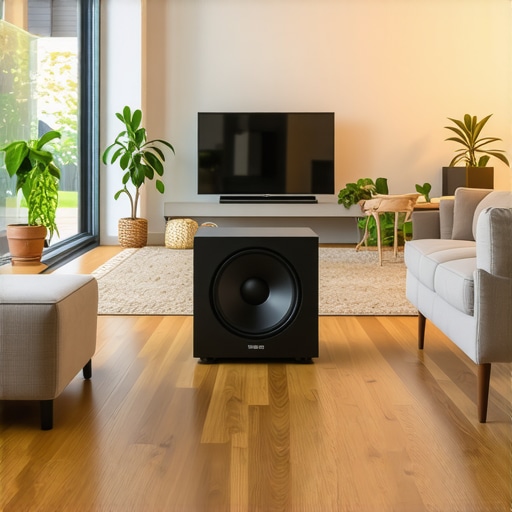
Think of your wireless subwoofer as the bass drum in a band—you want it to be heard clearly without overwhelming the stage. In an open-concept living room, placing the sub in the center might seem logical, but it often causes sound cancellation or dead spots. Instead, experiment with locations such as near a wall corner or against an external wall. I once placed mine behind a sofa, which surprisingly boosted bass response and reduced static interference. Use a **room map** to mark potential spots and test each for optimal sound. Remember, room acoustics significantly influence sound performance. Micro-adjust placement until bass feels balanced and punchy, not boomy or hollow.
Optimize Wireless Signal Pathways
Wireless subwoofers rely on a stable connection, similar to a phone call—interference can cut or distort the message. Reduce obstructions between your sub and receiver, like thick walls or metallic objects. If your sub still drops out or static persists, consider upgrading your Wi-Fi router or switching to a dedicated audio frequency band if supported. I tested this by relocating my router to a central spot and used a Wi-Fi extender, which drastically cut interference. For best results, ensure your router’s firmware is updated and avoid using congested Wi-Fi channels. If persistent issues occur, check out these signal fixes for more guidance on stabilizing your wireless connection.
Calibrate the Sound for Your Room
Even with perfect placement and signal, room acoustics can smear your audio experience. Use your soundbar’s auto-calibration feature—akin to tuning a musical instrument—to balance frequencies, especially bass. If your setup lacks this feature, manually adjust subwoofer volume and crossover settings. I once used a smartphone app to analyze my sound profile and tweaked the sub’s phase and gain, resulting in richer bass that filled my space evenly. Certain models support software calibration, but for stubborn acoustics, consider acoustic treatments like rugs and wall hangings to reduce echo. For detailed calibration tips tailored to your setup, explore expert calibration techniques.
Test and Tweak in Real Conditions
Finally, don’t settle after initial adjustments. Play your favorite action scene and walk around the room to listen for bass consistency. I made a habit of repositioning my sub during movie nights, moving it slightly until I achieved even coverage. Use a sound level meter app to objectively measure bass levels and ensure no area sounds muted or overly boomy. Remember, small changes—like angling the sub or shifting it an inch—can profoundly impact sound. Keep notes of your adjustments to track what works best. This iterative process is essential for achieving the cinematic experience you’re after with your surround soundbar system.
Many enthusiasts believe that simply choosing a Dolby Atmos soundbar or a high-end wireless sub guarantees cinematic quality, but in my experience, there’s a common misconception about what actually makes these systems perform optimally. One mistake many make is assuming that higher speaker count or more channels automatically translates into better sound. However, the *placement* and *room acoustics* play a far more pivotal role—especially in open-concept setups, where sound can easily bounce or cancel out if not carefully configured (source). Moreover, a frequent myth is that wireless subwoofers are hassle-free; in reality, they require meticulous signal pathway planning to prevent static, interference, or dropouts, which many overlook before purchasing (see more). An advanced mistake is neglecting to calibrate your system precisely for your specific room, ignoring how acoustic treatments or furniture placement can distort sound quality—this is where a professional calibration can make a noticeable difference. In fact, audio experts emphasize that fine-tuning based on acoustic measurements leads to a more immersive experience, rather than just relying on auto-calibration features (source). So, before upgrading your current system or investing in soundbar deals, remember that understanding these nuances can save you from costly mistakes and ensure you truly enjoy that cinematic surround effect. Are you falling for any of these misconceptions? Let me know in the comments!
Keep Your System Running Smoothly With the Right Equipment and Practices
Maintaining your Dolby Atmos soundbar setup requires a combination of quality tools and consistent habits. I personally rely on a calibrated sound level meter, such as the **RTiQ Digital SPL Meter**, which provides precise measurements of bass and overall sound levels across different room zones. This device helps me identify inconsistencies and fine-tune my system for balanced audio, especially crucial when dealing with complex surround sound configurations.
Another invaluable tool is the **Room EQ Wizard (REW)** software. I use REW extensively to analyze my room’s acoustic response. By generating frequency response measurements, I can spot problematic peaks or dips and adjust my subwoofer placement or equalization settings accordingly. This process ensures long-term performance stability and prevents acoustic issues from creeping in over time.
Regular firmware updates from your soundbar manufacturer can also make a significant difference. I set a monthly reminder to check for updates, which often include bug fixes, performance improvements, and new calibration features. Staying current with firmware is foundational to avoiding glitches that could impair Dolby Atmos effects or wireless subwoofer stability.
How do I maintain my sound system over time?
Consistent physical checks are vital. I periodically inspect all cables and wireless connections for wear or interference sources. For example, I moved my Wi-Fi router to a more central location, reducing signal dropouts in my open living space, which you can explore further in this guide. Incorporating a high-quality surge protector is also wise to shield your equipment from power fluctuations, ensuring reliable function and extending hardware lifespan.
In terms of software, I configure my soundbar’s audio settings to match my room’s unique acoustics, utilizing advanced adjustment options when available. This customization prevents distortion or loss of immersive Atmos height channels and keeps my system performing consistently.
Looking ahead, I predict that integration of AI-driven calibration tools will become standard, making setup and maintenance even more effortless. For now, applying systematic checks using precise tools like REW and SPL meters can dramatically improve your long-term enjoyment. I urge you to try one of these techniques—perhaps starting with regular firmware updates or acoustic analysis—to unlock the full potential of your surround sound system. Want personalized advice? Access the contact us for tailored tips adapted to your specific setup.
What I Wish I Knew When Setting Up My Wireless Subwoofer
One of the most eye-opening lessons I learned was that even the most advanced wireless subwoofers need strategic placement and signal management. Relying solely on manufacturer guidelines for small rooms can lead to frustrations in open spaces. Real-world experience taught me that experimenting with corners and avoiding obstructions makes a huge difference. I realized that the room’s acoustics and interference sources can turn a powerful system into a dull experience, but with patience, you can master it.
Additionally, I discovered that calibration isn’t a luxury—it’s essential. Using tools like Room EQ Wizard or sound level meters helped me unlock richer bass and clearer dialogue. Without these steps, even top-tier soundbars and wireless subs can sound underwhelming. This deeper understanding transforms setup from guesswork to a precise art, elevating your home theater experience beyond expectations.
My Arsenal of Tips and Tools for Stunning Sound
- Room EQ Wizard (REW): I swear by REW for analyzing my room’s frequency response. It highlights where bass cuts or boosts are needed, ensuring my wireless sub delivers punchy, consistent sound.
- RTiQ Digital SPL Meter: Precise measurements of sound levels across zones help me maintain balanced audio, especially during movie nights when immersion matters most.
- Firmware Updates: Regularly checking my soundbar’s firmware guarantees I benefit from improvements in stability and calibration features, preventing static and dropouts.
- Acoustic Treatments: Simple additions like rugs and wall hangings reduce echo and help my system sound natural, avoiding the common mistake of neglecting room acoustics.
For more detailed insights and advanced techniques, I highly recommend reading this comprehensive guide on surround soundbars. It’s packed with practical advice that can turn any ordinary setup into a true home theater.
The Invitation to Elevate Your Audio Journey
Your quest for pristine cinematic sound with premium soundbars and wireless subs isn’t over—it’s just beginning. With the knowledge and tools shared here, you have everything needed to optimize your space and elevate your audio experience. Remember, mastery comes from experimentation, patience, and continuous learning. The future of immersive sound lies in your hands—so why not take the next step today?
Have you ever struggled with wireless subwoofer placement or signal interference? Share your stories or questions below—I’d love to help you troubleshoot and achieve that perfect surround sound setup.
Leave a Reply